 Dunton Logistics
Warehouse efficiency is no longer about moving boxes faster. It is about creating a reliable flow from receiving to dispatch. Every unnecessary step consumes labor, space, time, and customer trust. A misplaced carton can delay an entire delivery route.
In his book Warehouse Management, industry expert Gwynne Richards explains, “The warehouse is a key link in the supply chain.” This view keeps improvement grounded in operational reality. Strong results begin with accurate inventory records, clear slotting decisions, and simple travel paths. Supervisors should study order data, walking distances, picking errors, and dock congestion. A five-minute delay, repeated 100 times, becomes a serious capacity problem.
This guide to How To Improve Warehouse Efficiency examines practical methods for improving daily performance. It considers layout design, barcode scanning, workforce training, warehouse management systems, and continuous measurement. Small changes matter. Moving fast-moving products closer to packing stations can reduce unnecessary footsteps. Standardized labels can prevent confusion during busy shifts. Regular cycle counts can reveal problems before customers notice them.
However, no method works perfectly in every facility. A solution that helps a high-volume operation may overwhelm a smaller warehouse. Automation can also create new maintenance and training demands. That deserves honest attention. Efficiency should not mean rushing employees or ignoring safety. It should mean removing avoidable effort while protecting accuracy, people, and service quality. Managers may need to test one change, measure its effect, and revise the plan. Improvement is rarely a straight line.
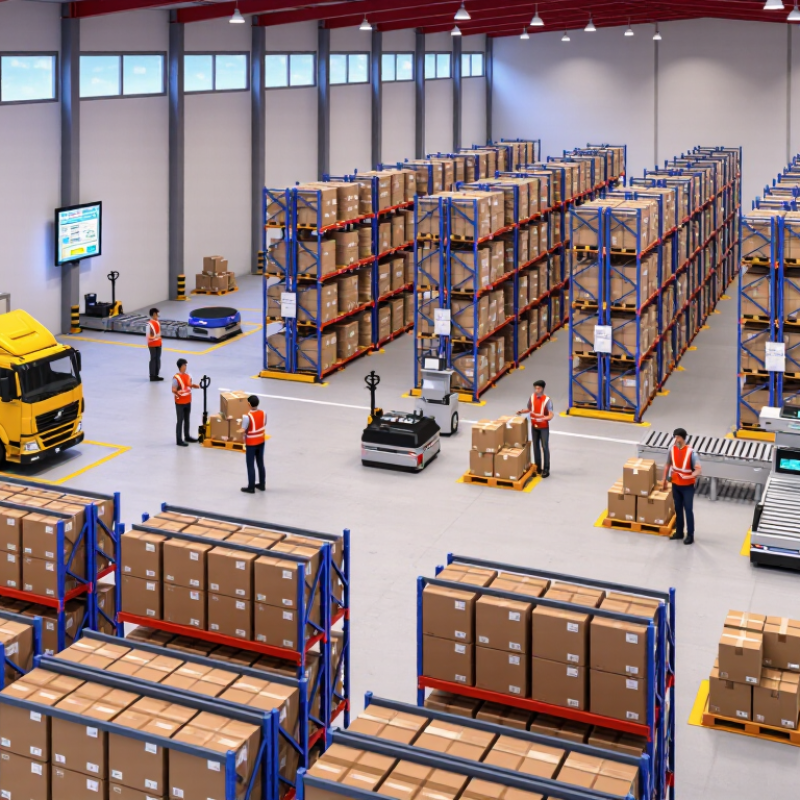
Top Ways to Improve Warehouse Efficiency
Assessing current warehouse processes and performance requires evidence, not assumptions. Walk the receiving dock during a busy shift. Record unloading times, put-away delays, and repeated data-entry steps. Compare planned task times with actual timestamps. A process may look efficient on paper but fail when pallets arrive unevenly.
In warehouse reviews, I examine order accuracy, picking distance, replenishment frequency, and inventory adjustments. A simple floor map can reveal congested aisles or poorly placed fast-moving items. Track performance by shift, zone, and order type. One average number can hide serious problems. Our first measurement was flawed because it ignored temporary workers and equipment downtime. That mistake changed the review.
Tips: Use short observation sessions. Photograph process layouts when permitted. Ask operators where delays occur. Validate their answers with scan records. Check cycle counts weekly. Measure safety-related interruptions separately, rather than treating them as lost productivity. Small details matter.
Reliable improvement depends on consistent definitions. Define “on time” before comparing teams. Separate picking time from waiting time. Review damaged inventory and short shipments alongside speed metrics. If accuracy falls after a productivity target rises, the target needs reconsideration. A faster process is not better when it creates rework. Managers should document changes, test them in one zone, and review results after several shifts. Leave room for correction.
| Process Area | Performance Metric | Current Performance | Recommended Target | Performance Gap | Operational Impact | Recommended Improvement Action | Priority |
|---|---|---|---|---|---|---|---|
| Receiving | Dock-to-stock cycle time | 14.5 hours | Less than 8 hours | 6.5 hours slower | Products remain unavailable for picking, increasing stockout risk and dock congestion. | Use appointment scheduling, pre-receipt documentation, barcode scanning, and standardized receiving checklists. | High |
| Receiving | Receiving accuracy | 97.2% | 99.5% or higher | 2.3 percentage points | Incorrect quantities or items create inventory discrepancies and downstream order delays. | Introduce two-step verification for high-value or high-volume receipts and use system-directed put-away. | High |
| Put-away | Put-away completion within 24 hours | 84% | 95% or higher | 11 percentage points | Delayed put-away reduces available storage capacity and causes inventory to remain in staging areas. | Set hourly put-away work queues, define staging-area limits, and use slotting rules based on demand frequency. | High |
| Storage | Storage capacity utilization | 91% | 80% to 85% | 6 to 11 percentage points high | High utilization restricts travel paths, increases handling time, and reduces flexibility during demand peaks. | Remove obsolete stock, redesign storage zones, and apply demand-based slotting with vertical space utilization. | High |
| Inventory Control | Inventory record accuracy | 96.8% | 99% or higher | 2.2 percentage points | Inaccurate records lead to short picks, emergency replenishment, and avoidable customer service issues. | Implement risk-based cycle counting, investigate root causes, and require scan confirmation at each movement. | High |
| Picking | Picker productivity | 72 lines per labor hour | 90 lines per labor hour | 18 lines per labor hour | Lower productivity increases fulfillment labor cost and limits daily order capacity. | Optimize pick paths, place fast-moving items near dispatch, and evaluate batch or zone picking. | High |
| Picking | Order picking accuracy | 98.6% | 99.7% or higher | 1.1 percentage points | Picking errors create returns, reshipping costs, customer dissatisfaction, and inventory adjustments. | Use location and item barcode scans, visual confirmation, and error reporting by employee and location. | High |
| Replenishment | Pick-face stockout rate | 3.8% | Less than 1.5% | 2.3 percentage points high | Stockouts interrupt picking and increase travel, waiting, and split-order activity. | Set min/max levels by demand pattern, trigger forward-pick replenishment earlier, and monitor exceptions. | High |
| Packing | Pack station utilization | 68% | 80% to 85% | 12 to 17 percentage points low | Underused stations indicate imbalance between picking, packing, labor scheduling, or order release. | Balance workloads by wave, cross-train employees, and align station capacity with hourly order volume. | Medium |
| Packing | Pack accuracy | 99.1% | 99.8% or higher | 0.7 percentage points | Incorrect packaging or documentation increases damage, returns, and transportation claims. | Standardize carton selection, use scan-to-pack verification, and audit packaging compliance daily. | Medium |
| Order Fulfillment | Order cycle time | 18.2 hours | Less than 12 hours | 6.2 hours slower | Longer processing time reduces service reliability and limits same-day or next-day fulfillment capability. | Review order release rules, reduce queue time between processes, and monitor aging orders in real time. | High |
| Shipping | On-time shipment rate | 93.5% | 98% or higher | 4.5 percentage points | Late shipments increase customer contacts, expedite requests, and service recovery costs. | Use cutoff-time controls, carrier-ready staging lanes, exception dashboards, and daily dispatch reviews. | High |
| Returns | Returns processing cycle time | 3.6 days | Less than 2 days | 1.6 days slower | Slow disposition delays resale, replacement decisions, and inventory availability. | Create dedicated returns workstations, classify return reasons, and establish clear disposition codes. | Medium |
| Labor Management | Direct labor utilization | 76% | 85% to 90% | 9 to 14 percentage points low | Low utilization increases cost per order and may indicate excessive travel, waiting, or poor scheduling. | Use workload forecasting, standardized work measurements, cross-training, and labor planning by shift. | Medium |
| Safety | Recordable incident frequency | 2.4 incidents per 200,000 hours | Continuous reduction | Requires corrective action | Safety incidents cause lost productivity, employee absence, operational disruption, and compliance exposure. | Conduct regular risk assessments, improve pedestrian and equipment separation, and reinforce near-miss reporting. | High |
| Continuous Improvement | Process standardization coverage | 61% | 90% or higher | 29 percentage points | Inconsistent work methods create variable productivity, quality results, and training requirements. | Document standard operating procedures, use visual work instructions, and audit critical processes routinely. | Medium |
Observe busy shifts at receiving and record unloading, put-away, and data-entry times. Compare planned times with actual timestamps. Paper plans can mislead.
Track order accuracy, picking distance, replenishment frequency, inventory adjustments, and equipment downtime. Review results by shift, zone, and order type. Averages hide issues.
Place frequently picked items near packing areas and around waist height. Keep slower stock farther away. Leave clear space around popular bins.
Use fixed locations, readable bin labels, and consistent item names. Separate similar-looking products. Count fast-moving stock more often. Small errors spread quickly.
Scanning reduces manual entry and supports location checks. It cannot correct inaccurate records or unclear procedures. Better data must come first.
Connect scanners, inventory software, sensors, and live dashboards. Workers can see locations, priorities, and delayed tasks without repeated walking. Avoid adding tools blindly.
No. Map the process before automating it. Test one zone, then compare speed, errors, training time, and rework. Automation can magnify confusion.
Document each change and test it across several shifts. Ask operators about delays, then verify their feedback with scan records. Leave room for correction. Perfect results are unrealistic.
Improving warehouse performance begins with a clear assessment of current processes, including receiving, storage, picking, packing, and shipping. By reviewing productivity levels, error rates, order times, and space utilization, managers can identify delays and unnecessary movements. Organizing inventory according to demand, size, and handling frequency also makes products easier to store and retrieve, reducing travel time and improving order accuracy.
How To Improve Warehouse Efficiency also depends on creating a practical layout that supports smooth material flow. Clearly defined work zones, suitable equipment, and well-planned storage locations can reduce congestion and physical effort. Technology can improve inventory visibility, tracking, and task coordination, while regular staff training ensures that procedures are followed consistently and safely. Finally, ongoing measurement through key performance indicators helps teams evaluate progress, address new problems, and maintain steady efficiency gains over time.
