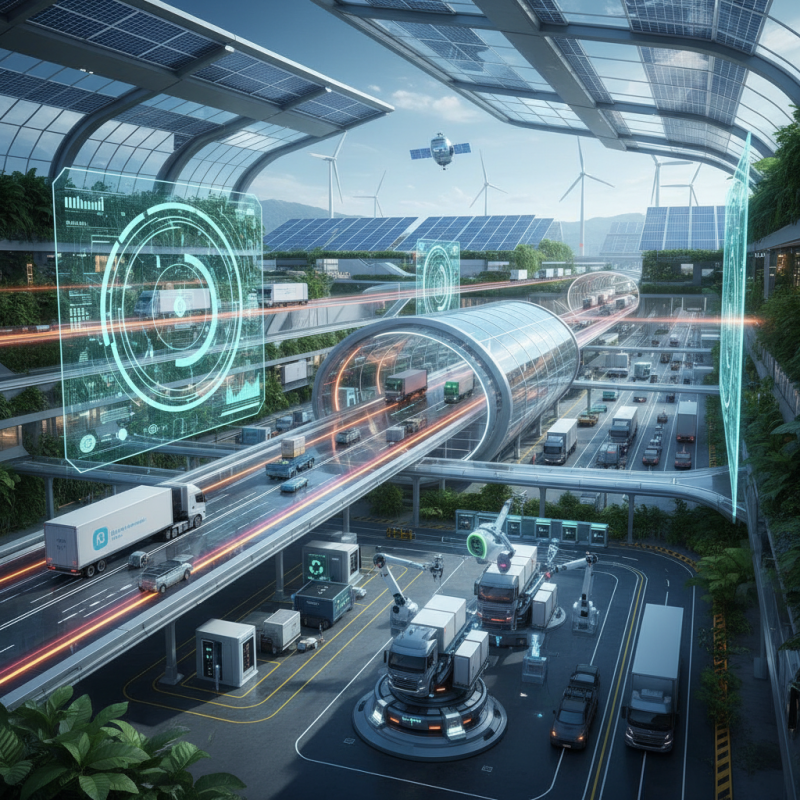
As we approach 2026, the landscape of supply chains is rapidly evolving. Understanding the "Logistics Technology Trends 2026" is crucial for businesses aiming to stay competitive. The integration of advanced technologies is set to redefine logistics processes.
Innovative solutions such as AI and IoT will play pivotal roles. These trends promise increased efficiency, real-time tracking, and improved decision-making. However, companies must also consider the challenges that come with implementation. Not all organizations have the resources needed to adapt quickly.
Moreover, the focus on sustainability is becoming paramount. Logistics technology must not only enhance performance but also minimize environmental impact. Balancing these factors requires thoughtful strategy and planning. Organizations can thrive by embracing change but must remain aware of potential pitfalls. 2026 is just around the corner, and preparation is key.
Emerging Technologies Reshaping Supply Chain Logistics in 2026
The landscape of supply chain logistics is rapidly evolving. Emerging technologies are reshaping how goods move and are managed. In 2026, we can expect advancements like artificial intelligence (AI) and blockchain to dominate the scene. These innovations will enhance transparency and efficiency.
AI can analyze massive data sets, predicting demand with impressive accuracy. This often leads to better inventory management. However, the reliance on technology could also introduce vulnerabilities. What happens when algorithms fail or data is misinterpreted? Such risks need serious attention.
Blockchain technology offers a way to secure transactions. It allows for real-time tracking of products, reducing delays. Yet, the implementation is complex. Many companies may struggle with integration. Training personnel to adapt can also be a hurdle. The potential is significant, but realistic challenges must be acknowledged.
Impact of AI and Machine Learning on Supply Chain Efficiency
Artificial Intelligence (AI) and machine learning are transforming supply chains. According to a report by McKinsey, companies using AI can improve forecasting accuracy by up to 90%. This sharp increase enables better inventory management. Consequently, businesses can reduce excess stock and minimize holding costs.
AI-driven analytics provide deeper insights into customer behavior. They allow companies to predict demand patterns more accurately. A study by Gartner reveals that organizations implementing machine learning can achieve a 20% reduction in operational costs. However, challenges remain. Many supply chain managers find it difficult to fully integrate new technologies with existing systems. The learning curve can be steep.
In terms of efficiency, AI systems can optimize routes and reduce delivery times. Automated decision-making can enhance responsiveness. Nevertheless, reliance on technology raises concerns about cybersecurity and data privacy. As supply chains move towards more technology-driven solutions, these risks must not be overlooked. Balancing efficiency gains with reliable security measures is essential for future success.
The Role of Blockchain in Enhancing Supply Chain Transparency
Blockchain technology plays a pivotal role in transforming supply chain transparency. It creates a decentralized ledger that records transactions securely and immutably. This allows all parties in the supply chain to access the same information in real-time. Transparency reduces the risk of fraud and encourages accountability among participants.
Many companies are hesitant to adopt blockchain fully. Concerns about data privacy and integration with existing systems linger. Suppliers and manufacturers must collaborate closely to overcome these challenges. Training staff in blockchain fundamentals is vital for successful implementation.
However, the potential benefits are significant. Enhanced traceability of products can improve safety and compliance. Customers can verify the origins of goods, building trust in the brand. As industries continue adapting, blockchain may become an essential tool in achieving greater efficiency. The road to widespread adoption is not without its bumps, but the journey is worth exploring.
Supply Chain Transparency Enhancement Through Technology: 2026 Trends
Automation Trends: Robotics and Autonomous Vehicles in Logistics
In the logistics sector, automation is transforming operations.
Robotics and autonomous vehicles are at the forefront of this change. They streamline processes, reduce human error, and improve efficiency. Automated systems can manage inventory, sort packages, and deliver goods with precision.
However, reliance on automation raises some concerns. Job displacement is a significant issue for workers. Many fear their roles may become obsolete.
Additionally, autonomous vehicles face challenges. They require robust infrastructure and precise navigation technologies. Safety remains a priority. Incidents involving autonomous systems can lead to public skepticism.
Despite these concerns, the benefits of automation are compelling. For instance, robotics can operate 24/7, increasing throughput significantly.
Autonomous delivery vehicles will soon become more common, especially in urban areas. Addressing the challenges will be essential for successful integration in the supply chain.
Sustainability Innovations Driving Eco-Friendly Supply Chain Practices
Sustainability is becoming crucial in supply chain management as companies face mounting pressure to reduce their environmental impact. According to a 2022 report by McKinsey, nearly 70% of supply chain leaders are integrating sustainable practices into their operations. This trend reflects a broader shift towards eco-friendly practices that aim to minimize waste and optimize resources.
Innovations in logistics technology play a significant role in these efforts. Technologies like artificial intelligence and blockchain help improve supply chain transparency and efficiency. For instance, AI can help forecast demand accurately, reducing unnecessary production and excess inventory. Blockchain offers traceability, ensuring that products meet sustainability standards. These solutions not only enhance the supply chain but also contribute to a greener planet.
Tip: Regularly evaluate your sourcing practices. This can reveal opportunities to work with sustainable suppliers. Aim for a circular supply chain model, which reduces waste significantly. Getting started can involve simple changes, like using renewable materials and minimizing packaging.
Challenges remain, though. Implementing sustainable practices requires investment and commitment. Many organizations struggle to measure their carbon footprint accurately, leading to misinformation about their sustainability efforts. Continuous improvement and education in sustainable logistics are essential for real progress.
FAQS
I improve supply chain efficiency?
Organizations using machine learning can reduce operational costs by around 20%.
Many struggle to integrate new technologies with existing systems, facing a steep learning curve.
Blockchain creates a decentralized ledger for secure and real-time transaction recording.
Concerns about data privacy and integration with their current systems hold them back.
Nearly 70% of leaders are integrating sustainable practices to reduce environmental impact.
Innovations like AI and blockchain help improve efficiency and transparency in supply chains.
Use renewable materials and minimize packaging to reduce waste.
Organizations often struggle to accurately measure their carbon footprints and manage investments.
It's a system that significantly reduces waste by reusing resources and materials effectively.
Conclusion
The article "Exploring Logistics Technology Trends Shaping 2026 Supply Chains" delves into the emerging technologies that are transforming supply chain logistics. As we look toward 2026, key logistics technology trends include the integration of AI and machine learning, which are enhancing supply chain efficiency through predictive analytics and real-time data processing. Additionally, blockchain technology is playing a crucial role in increasing supply chain transparency, enabling better tracking and secure transactions.
Automation is another significant trend, with robotics and autonomous vehicles expected to revolutionize logistics operations by streamlining processes and reducing labor costs. Furthermore, sustainability innovations are becoming increasingly important, driving eco-friendly practices within supply chains and responding to the growing demand for environmentally conscious operations. Collectively, these logistics technology trends in 2026 promise to reshape the way supply chains operate, making them more efficient, transparent, and sustainable.
 Dunton Logistics