Dunton Logistics
In today's fast-paced market, order fulfillment speed is crucial for business success. Customers expect quick and reliable service. When businesses meet these expectations, they gain a competitive edge. However, many struggle with efficiency. This raises the question: How To Improve Order Fulfillment Speed?
Optimizing order fulfillment is not just about speed. It’s about accuracy, communication, and customer satisfaction. Businesses must analyze their processes critically. Are their warehouse systems efficient? Is their staff well-trained? These aspects often reveal significant areas for improvement.
Moreover, neglected challenges can hinder overall performance. For instance, delays can lead to customer dissatisfaction and lost sales. It's essential to address these issues head-on. By focusing on how to improve order fulfillment speed, businesses can better serve their customers and ultimately enhance their reputation in the market.
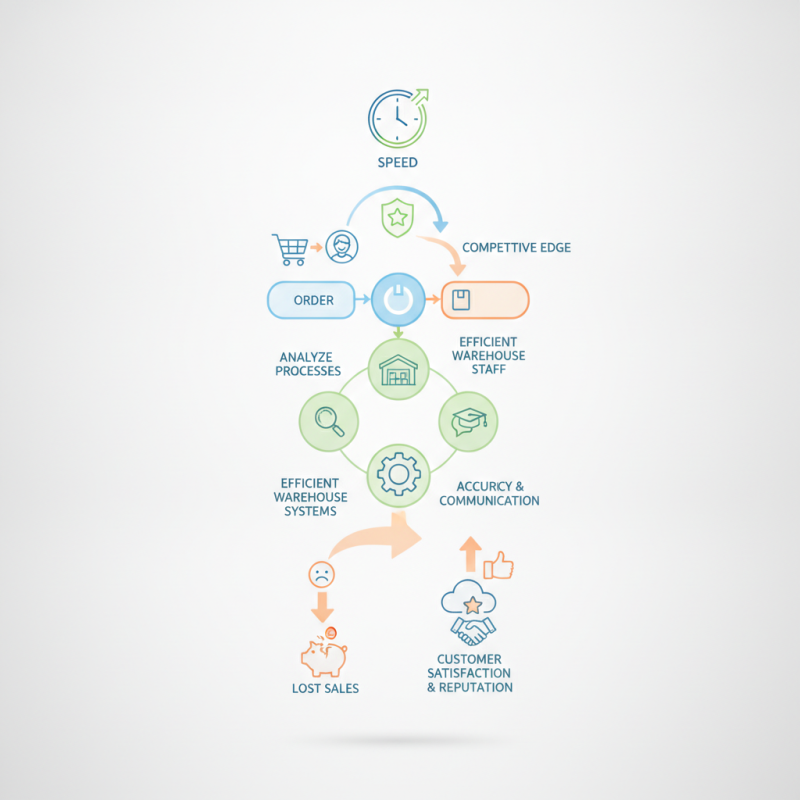
In today's fast-paced market, order fulfillment speed is essential for gaining a competitive edge. Customers expect quick deliveries. Delays can lead to dissatisfaction and lost sales. Businesses that streamline their processes often see increased loyalty and repeat purchases. Speed is not just a convenience; it's a necessity.
To improve fulfillment speed, focus on warehouse organization. An orderly space allows for faster picking and packing. Regularly train staff on efficient techniques. Empower your team to identify and resolve bottlenecks. Use technology, like inventory management systems, to track products in real time. This reduces errors and accelerates the fulfillment timeline.
Consider your delivery options. Partnering with reliable carriers can boost speed significantly. Offer various shipping choices to cater to different customer needs. Quick delivery can be a key differentiator in crowded markets. However, not all businesses can achieve this overnight. Evaluate your current capabilities and set realistic timelines for improvements. Reflect on your customer feedback. Are there consistent complaints about delivery times? Addressing these can reveal opportunities for enhancement.
Order fulfillment speed plays a crucial role in shaping customer satisfaction and retention. When customers receive their orders quickly, they are more likely to feel valued. An efficient delivery process can create positive emotions. Customers appreciate knowing that their needs are prioritized. Conversely, delays can lead to frustration. Slow fulfillment might cause customers to reconsider their choices.
Tips for improving order fulfillment include optimizing inventory management. Businesses should regularly assess stock levels to ensure availability. An accurate inventory system can reduce delays significantly. Additionally, leveraging technology can streamline processes. Automating order processing leads to faster fulfillment. It minimizes human errors that could slow down orders.
Understanding customer expectations is vital. Conducting surveys can provide insights into delivery preferences. This data can guide businesses in adjusting strategies. However, rapid fulfillment isn't a one-size-fits-all solution. Companies must balance speed with quality. Overpromising can harm brand reputation if not delivered consistently. Evaluating both speed and reliability is essential for fostering long-term customer loyalty.
In today’s competitive landscape, order fulfillment speed is a crucial element for business growth. Industry statistics reveal a strong correlation between faster fulfillment times and increased sales. Businesses that optimize their fulfillment processes commonly see a direct boost in customer satisfaction, leading to repeat purchases. For instance, companies that reduce order processing times by just a few hours can enhance their sales by up to 30%.
One essential tip is to implement technology solutions that streamline order management. Automation can help in tracking and processing orders, making the entire system more efficient. Another crucial aspect is to gather data on fulfillment trends and customer preferences. Use this data to refine your shipping options. Understanding the specifics of your customer's purchasing patterns can help you make better decisions.
However, it's important to be aware of potential pitfalls. Not all methods of speeding up order fulfillment lead to positive results. Some businesses rush to improve delivery times without improving product quality or service reliability. This can lead to dissatisfaction and harm long-term customer relationships. Reflect on your current practices regularly to ensure that speed does not compromise your overall service quality.
| Fulfillment Speed (Days) | Percentage of Customers Satisfied (%) | Sales Growth (%) | Return Rate (%) |
|---|---|---|---|
| 1-2 Days | 95 | 30 | 5 |
| 3-5 Days | 80 | 20 | 8 |
| 6-8 Days | 65 | 10 | 12 |
| 9-12 Days | 50 | 5 | 15 |
| 13+ Days | 30 | 2 | 20 |
Enhancing order fulfillment speed is crucial for modern businesses aiming to meet customer expectations. Research shows that 80% of consumers prioritize delivery speed when making online purchases. Fast fulfillment leads to higher customer satisfaction and repeat purchases. However, improving speed requires strategic planning and resources.
Implementing automation in warehouses is one effective approach. A report by McKinsey highlighted that automation can reduce order processing time by up to 30%. This not only accelerates fulfillment but also decreases human error. Ensuring accurate inventory management is another vital strategy. A recent study found that 25% of businesses lose sales due to stockouts. Using real-time tracking systems can help avoid these pitfalls while speeding up the overall process.
Partnerships with third-party logistics (3PL) providers can also be beneficial. These providers often have advanced distribution networks, helping businesses reach customers faster. However, relying on 3PLs can present challenges, such as varying service levels. Businesses must evaluate their partners carefully to ensure alignment with their goals. Balancing speed with reliability is key to sustaining a competitive edge.
Order fulfillment speed has become critical in today's competitive landscape. Technology plays a pivotal role in enhancing these processes. According to recent industry reports, e-commerce companies that improve their order fulfillment speed can boost customer satisfaction by up to 30%. This indicates a direct correlation between speed and consumer loyalty.
Automation and advanced analytics are at the forefront of these improvements. For instance, warehouses equipped with robotics can handle tasks 50% faster than traditional methods. However, companies often overlook the need for staff training in conjunction with implementing new technologies. While tech adoption is crucial, the human element remains essential for optimal performance.
Investments in AI-driven demand forecasting can reduce stockouts by 20%, leading to more timely fulfillment. Yet, many logistics firms struggle to integrate these systems effectively. This disparity suggests a gap in expertise. The challenge for businesses is not merely adopting technology, but ensuring alignment with existing processes. The need for ongoing evaluation and refinement cannot be overstated.
: Order fulfillment speed is crucial for gaining a competitive edge and meeting customer expectations.
Improving warehouse organization can lead to faster picking and packing, enhancing overall speed.
Technology, like inventory management systems, helps track products in real time, reducing errors and delays.
Reliable carriers and various shipping choices can boost fulfillment speed and customer satisfaction.
Automation can reduce processing time by up to 30%, thus speeding up fulfillment and minimizing errors.
A significant number of businesses lose sales due to stockouts and can face fulfillment challenges.
3PL providers use advanced networks to help businesses deliver products faster but can have varying service levels.
Reflecting on feedback about delivery times can uncover areas for improvement in fulfillment procedures.
While speed is crucial, reliability and overall service quality also significantly impact customer loyalty.
Adjusting processes takes time and may initially lead to confusion before improvements are realized.
Improving order fulfillment speed is essential for businesses seeking a competitive edge in today's fast-paced market. A swift order fulfillment process not only enhances customer satisfaction but also boosts retention rates, as customers increasingly favor companies that deliver promptly. Research shows a strong correlation between fulfillment speed and sales growth, underscoring the importance of efficient operations.
To enhance order fulfillment speed, modern businesses can adopt various strategies, such as optimizing inventory management and refining their logistics processes. Additionally, leveraging technology plays a crucial role in accelerating order fulfillment, enabling automation and real-time tracking that streamline operations. By focusing on "How To Improve Order Fulfillment Speed," companies can position themselves for sustained success and improved customer loyalty.
