Dunton Logistics Dunton Logistics

How To Improve Warehouse Efficiency in 2026 for Buyers?

Time:2026-04-09 Author:Madeline
0%

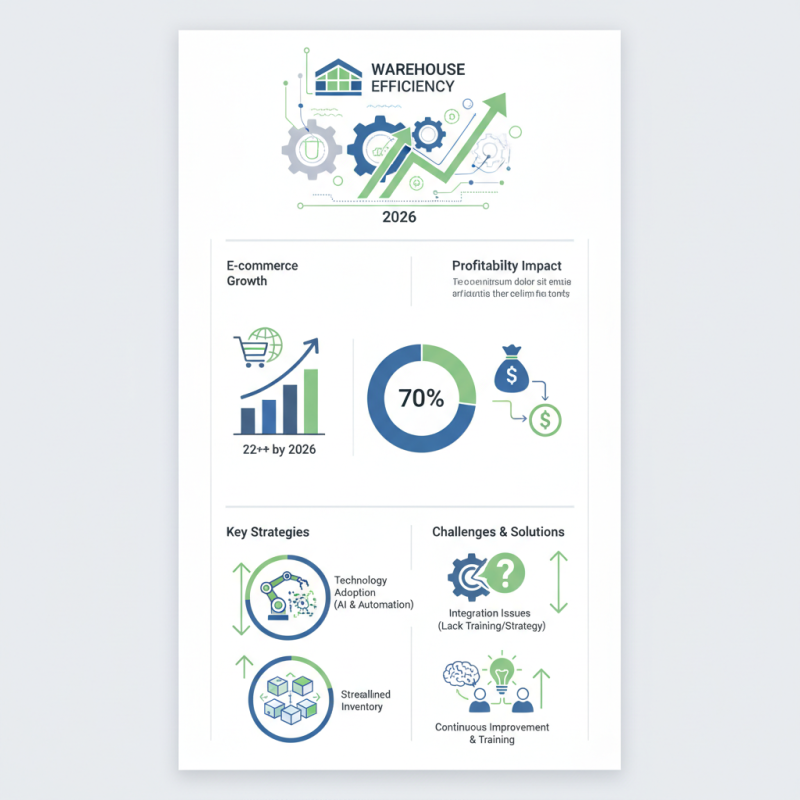
In today's fast-paced logistics environment, buyers face pressing challenges about warehouse efficiency. With e-commerce poised to contribute over 22% to global retail by 2026, companies must prioritize optimization. According to a report from Warehouse Management Systems, a staggering 70% of logistics managers believe improving warehouse processes directly impacts profitability.

"How To Improve Warehouse Efficiency" requires a multifaceted approach. Technology adoption, such as automation and AI, is crucial. A study by McKinsey noted that advanced technologies could enhance labor productivity by 20-25%. Despite this, many organizations grapple with integrating these technologies effectively. Poor training and lack of strategy often result in limited success. It's a reflection on industry readiness for digital transformation.

Moreover, streamlining inventory management is essential. An efficient warehouse can reduce total operational costs by 30%. However, 40% of companies still rely on outdated inventory systems. Learning from these shortcomings is vital. Embracing a culture of continuous improvement and investment in employee training is essential for long-term success in enhancing warehouse efficiency.
How To Improve Warehouse Efficiency in 2026 for Buyers?

Strategies for Implementing Automation in Warehousing Operations

The landscape of warehousing is rapidly evolving, especially with the push for automation. Implementing automation in warehousing operations can significantly enhance efficiency. However, it requires careful planning and consideration. Start with assessing the current workflow. Identify bottlenecks and repetitive tasks that can be automated. This analysis is crucial. It helps to determine where automation will have the most impact.

Investing in automation tools can streamline operations. For instance, robotic process automation can handle inventory management efficiently. Automated sorting systems can reduce human error in order picking. Still, it’s important to train staff to work alongside these technologies. The transition might be challenging, and there will be a learning curve. Encouraging open communication can ease these transitions, creating a collaborative atmosphere.

Monitoring the effectiveness of automation is vital. It’s not a one-time investment; continuous assessment ensures that the processes run smoothly. If certain automated solutions are not yielding the desired outcomes, consider recalibrating or replacing them. Embrace flexibility and adaptability, as what works today might need refinement tomorrow. Prioritize an agile mindset to stay ahead in the competitive warehousing sector.

Optimizing Inventory Management Techniques for Increased Productivity

Effective inventory management is crucial for improving warehouse efficiency in 2026. Streamlining processes helps reduce costs. Buyers must focus on real-time data to make informed decisions. Accurate tracking is essential. When stock levels are known, restocking becomes timely. This prevents overstock and stockouts, which can stall productivity.

Implementing advanced inventory management techniques can lead to significant improvements. For example, using automated systems can reduce human error. Automated solutions save time on routine tasks. They allow staff to focus on more complex activities. Regular audits are important for maintaining inventory accuracy. Both buyers and warehouse managers should prioritize these audits.

Flexibility is another key aspect. Adapting inventory strategies based on seasonal demand can enhance effectiveness. If a technique isn’t yielding expected results, it’s worth re-evaluating. Being open to adjustments can significantly improve operational efficiency. The goal is to create a system that evolves alongside market needs.

Leveraging Data Analytics to Enhance Warehouse Performance

In 2026, leveraging data analytics will be essential for improving warehouse efficiency. Data can drive decisions and optimize processes. For instance, predictive analytics can forecast inventory needs. This reduces excess stock and minimizes storage costs. Real-time data analysis allows for responsive adjustments in operations. Every detail counts in maximizing outputs.

Data also plays a significant role in understanding labor patterns. Tracking workforce efficiency can reveal trends. Are certain shifts more productive? Insights can guide staff allocation and training. However, relying solely on data may overlook human factors. Employee morale and teamwork are crucial. Balancing analytics with employee feedback is vital.

Moreover, implementing data analytics requires robust systems and skilled personnel. Investing in technology and training creates initial challenges. Not all data will be valuable; filtering out noise is necessary. Companies must remain flexible and willing to adapt their strategies. Continuous improvement through data insights is a journey, not a destination.

How To Improve Warehouse Efficiency in 2026 for Buyers?

Warehouse Metric Current Value (2025) Target Value (2026) Improvement (%)
Order Fulfillment Rate 85% 95% 11.76%
Average Picking Time (mins) 20 15 25%
Inventory Accuracy (%) 92% 98% 6.52%
Space Utilization (%) 75% 85% 13.33%
Returns Processing Time (days) 5 2 60%

Integrating Sustainable Practices for Efficient Warehouse Management

In 2026, integrating sustainable practices into warehouse management will be crucial for enhancing efficiency. Recent studies by the Logistics Management Association reveal that warehouses utilizing eco-friendly practices can achieve up to a 30% reduction in operational costs. These practices not only lower expenses but also promote a healthier work environment. Effective energy management systems can cut energy use by 25% while creating a comfortable space for employees.

Renewable energy solutions, like solar panels, are becoming more accessible for warehouses. Implementing these can result in significant savings over time. However, many facilities still struggle with high initial investments, demonstrating a gap in sustainable adaptation. In addition, recycling and waste reduction strategies are essential. According to the Environmental Protection Agency, optimizing waste management processes can minimize landfill contributions by up to 40%.

Yet challenges persist. Employees may resist changes to established routines. Furthermore, keeping staff engaged in sustainability initiatives remains difficult. The key lies in training programs that promote awareness and commitment. Building a culture that prioritizes sustainability is necessary for realizing long-term benefits. Fostering a mindset of environmental stewardship will ultimately lead to greater efficiency and workplace satisfaction.

Training and Development Programs to Boost Workforce Efficiency

Training and development programs play a crucial role in enhancing warehouse efficiency for buyers in 2026. Investing in comprehensive training ensures that workers are equipped with the latest skills. Regular training sessions on new technologies and processes can empower employees. A workforce that understands current best practices will operate more effectively and respond quickly to challenges.

Developing tailored programs is essential. For example, hands-on workshops can simulate real-life scenarios. Employees can practice their skills in a controlled environment. This not only builds confidence but also identifies areas needing improvement. It's important to gather feedback after each training session. This can reveal gaps in knowledge or effectiveness. Continuous assessments will help in refining the programs further.

Moreover, fostering a culture of learning boosts motivation. Encourage employees to share insights and strategies. Recognize achievements to keep morale high. However, it's not just about formal training. Informal learning through peer interactions also builds competence. Employees may learn from each other’s experiences, leading to innovative solutions. Balancing structured and spontaneous learning opportunities is key for sustaining efficiency in the warehouse.

FAQS

: What is the first step in implementing automation in warehousing?

: Start by assessing the current workflow to identify bottlenecks and repetitive tasks.

Why is staff training important during automation?

Training helps staff work alongside new technologies and eases the transition.

How can automated systems aid in inventory management?

Automated systems reduce human error and save time on routine tasks, improving efficiency.

What should be done if automation does not yield desired outcomes?

Consider recalibrating or replacing ineffective automated solutions.

How does data analytics enhance warehouse performance?

Data analytics drives decisions, predicts inventory needs, and allows for responsive adjustments.

Why are regular audits important in inventory management?

Audits maintain accuracy and help avoid issues like overstock and stockouts.

What is a key aspect of effective inventory strategies?

Flexibility in adapting to seasonal demand enhances overall effectiveness.

How can employee morale impact warehouse efficiency?

Balancing data insights with employee feedback is essential for a productive environment.

What challenges might arise from implementing data analytics?

Initial investment in technology and skilled personnel can be difficult, and not all data will be useful.

How should companies approach continuous improvement in warehousing?

Companies must remain flexible and committed to adapting their strategies based on data insights.

Conclusion

In the quest to understand **how to improve warehouse efficiency** in 2026, several key strategies emerge that can significantly enhance operations. Firstly, implementing automation in warehousing processes is critical, as it reduces manual labor and increases speed. Coupled with optimized inventory management techniques, businesses can achieve higher productivity levels by ensuring that stock levels are efficiently maintained and fluctuations are promptly addressed.

Furthermore, leveraging data analytics is essential for enhancing warehouse performance by providing insights into operations and helping identify areas for improvement. Integrating sustainable practices not only contributes to environmental goals but also streamlines processes for better resource management. Lastly, investing in training and development programs for the workforce is vital for boosting overall efficiency, ensuring that employees are equipped with the necessary skills to adapt to new technologies and methods. By focusing on these strategies, warehouses can navigate the challenges of the future effectively.

Madeline

Madeline

Madeline is a dedicated marketing professional with a wealth of expertise in our company's core offerings. With a keen understanding of the industry, she brings a unique perspective to her role, consistently delivering high-quality content that highlights the superior aspects of our products. As......