Dunton Logistics Dunton Logistics

How to Ensure Logistics Equipment Safety Compliance?

Time:2026-10-13 Author:Oliver
0%

Safe logistics operations depend on more than reliable forklifts, conveyors, pallet wrappers, and automated storage systems. They require consistent control from purchase to daily use. Logistics Equipment Safety Compliance gives warehouses a practical framework for reducing preventable injuries, product damage, and operational interruptions.

A strong program begins with equipment selection. Managers should review rated capacity, guarding, emergency stops, operator visibility, and manufacturer instructions. A forklift carrying a 1,500-kilogram load needs clear floor markings and sufficient aisle space. A conveyor requires protected pinch points and accessible isolation controls. These details are easy to overlook. Small details matter.

Daily inspections should include brakes, tires, forks, sensors, cables, alarms, and visible damage. Workers need documented training, not only a quick demonstration beside the loading dock. Supervisors should record inspection results, repair decisions, and recurring faults. Experienced technicians can identify unusual vibration or heat before a failure becomes obvious. However, paperwork alone proves little. A signed checklist cannot confirm that an inspection was careful.

Effective compliance also depends on risk assessments, maintenance schedules, emergency drills, and periodic internal audits. Requirements may differ by location, equipment type, and workplace conditions, so competent safety professionals should verify applicable standards. This article explains how to build a practical system around those expectations. It also examines common weaknesses, including rushed inspections, unclear ownership, and outdated procedures. No program is perfect. Conditions change, people make mistakes, and new equipment can expose gaps that earlier reviews missed. Continuous improvement remains essential.
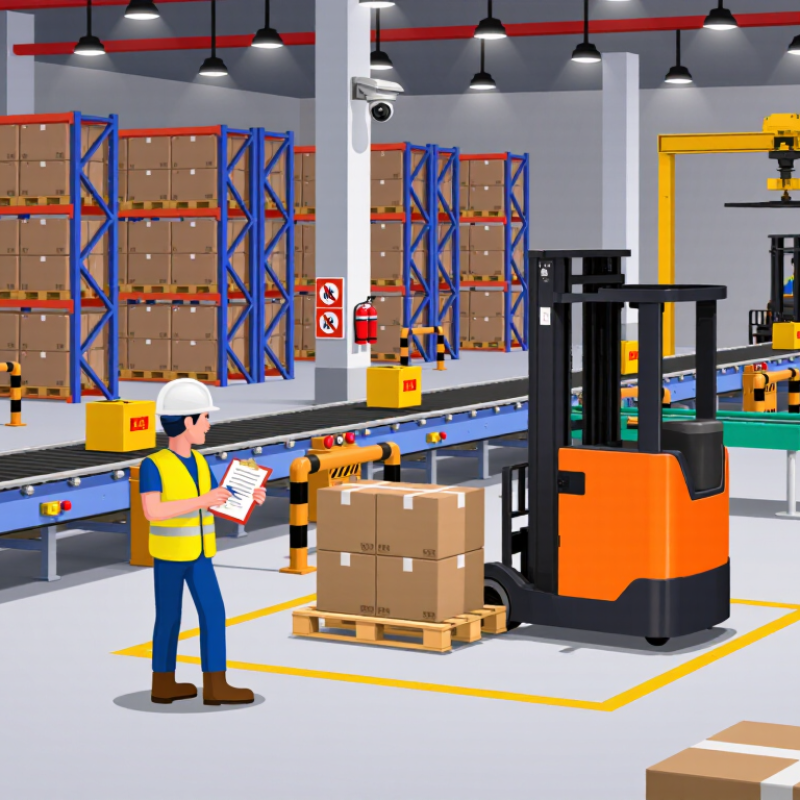
How to Ensure Logistics Equipment Safety Compliance?

Defining Logistics Equipment Safety Compliance Requirements

Safety compliance begins with a written definition, not a generic checklist. Define each equipment class, intended load, operating speed, and workplace condition. A pallet truck in a chilled room faces different risks from a conveyor beside a packing line. Requirements should identify guarding, emergency stops, brakes, alarms, visibility, and safe access points. Keep measurable limits. “Use carefully” is not a requirement.

A practical specification also assigns responsibility. State who may operate, inspect, repair, isolate, and approve equipment for service. Operators need documented training and task-specific authorization, supported by observed demonstrations. Inspection intervals should reflect usage, dust, moisture, impact history, and manufacturer guidance. Record equipment details, defects, corrective actions, and return-to-service approval. Small records matter.

During site reviews, compare written requirements with real behavior. Watch how loads shift, where pedestrians pause, and whether emergency controls remain reachable. Interview operators; they often notice recurring faults before a formal audit does. Risk assessments should be reviewed after modifications, near misses, or workflow changes. I have seen teams rely too heavily on annual inspections. That approach can miss damage developing between checks. Requirements should be tested and revised when evidence exposes a gap.

Identifying Hazards Across Warehousing and Transport Equipment

Warehousing and transport equipment create different hazards, but they often overlap at busy handover points. Forklifts may strike pedestrians, while conveyors can trap loose clothing or fingers. Loading docks add risks from moving trailers, dock plates, and uneven surfaces. The U.S. Occupational Safety and Health Administration reports about 85 forklift-related deaths and 34,900 serious injuries annually. Those figures make equipment inspection more than a paperwork task.

A practical assessment should follow the equipment’s full journey. Observe forklift reversing near blind corners, pallet movement on damaged racking, and workers stepping between vehicles. Check alarms, brakes, guards, emergency stops, and load ratings. The UK Health and Safety Executive states that workplace transport incidents account for about 25% of workplace fatalities. Separate pedestrian routes, physical barriers, speed controls, and high-visibility zones can reduce exposure, but only when workers use them consistently.

Small failures matter.

Transport equipment also needs attention beyond the warehouse door. Inspect trailer floors, restraint systems, tail lifts, and cargo stability before departure. Record defects and remove unsafe equipment from service immediately. Training should use real site conditions, not only classroom slides. A driver may understand the procedure yet still rush during a late delivery. That human gap deserves honest review. The National Safety Council’s Injury Facts data continues to identify transportation incidents among major causes of occupational death in the United States. Compliance becomes stronger when supervisors review near misses, contractor practices, and changing traffic patterns each week. A checklist alone is not enough.

Establishing Equipment Inspection, Maintenance, and Testing Procedures

A safe logistics operation begins with a written inspection procedure for every forklift, conveyor, pallet truck, and loading platform. The procedure should identify who checks each asset, when checks occur, and how defects are recorded. Before each shift, operators can examine tires, forks, guards, alarms, brakes, battery connections, and visible leaks. A simple form should capture the equipment number, inspection time, meter reading, and employee signature. Any failed item needs a clear status, such as “out of service,” until a competent technician approves its return. Small details matter.

Maintenance schedules should combine manufacturer guidance, operating hours, site conditions, and previous failure records. Dusty warehouses may require more frequent cleaning than enclosed facilities. Technicians should inspect chains, bearings, hydraulic lines, emergency stops, and protective interlocks. Testing must be practical, documented, and performed with calibrated instruments when measurements affect safety. Load tests, brake tests, and alarm checks should follow approved limits and controlled conditions. Never rely on a successful restart alone. It proves very little. Supervisors should review overdue tasks weekly and investigate repeated faults instead of resetting them repeatedly.

Training turns paperwork into reliable behavior. Operators need hands-on demonstrations, not only a signed attendance sheet. They should know how to isolate defective equipment, report near misses, and stop work without pressure. Keep inspection forms, repair orders, test results, and training records in a searchable system. Audits should sample real equipment and compare its condition with the records. Records can be wrong. That is why independent spot checks are valuable. Review the procedure after incidents, layout changes, or new equipment arrives. A checklist may look complete while missing the hazard workers actually face.

How to Ensure Logistics Equipment Safety Compliance?

Establishing Equipment Inspection, Maintenance, and Testing Procedures

This planning chart converts common safety inspection requirements into approximate annual check frequencies. Forklifts require inspection before being placed in service each day or shift, emergency eyewash equipment should be activated weekly, portable fire extinguishers require monthly visual inspection, and overhead cranes require periodic inspections based on service conditions and applicable requirements. Site-specific regulations and equipment manuals should always be followed.

Reference basis: OSHA 29 CFR 1910.178, OSHA 29 CFR 1910.179, OSHA 29 CFR 1910.151(c), and NFPA 10 inspection practices.

Training Workers and Managing Safe Equipment Operation

Safe logistics equipment operation begins with capable, tested workers. Experience on warehouse floors shows that rushed training creates quiet risks. Workers should practice inspections, load handling, turning, reversing, parking, and emergency shutdowns. Training must match each machine and site condition. A short classroom session is not enough.

The Occupational Safety and Health Administration estimates that powered industrial trucks cause about 85 fatal incidents and 35,000 serious injuries annually in the United States. The Bureau of Labor Statistics also recorded more than 1,000 fatal injuries among transportation and material-moving workers in 2023. These figures do not prove every incident involved equipment. They do show why operating skill requires constant attention. Supervisors should observe workers during real tasks, not only during examinations. Refresher training is necessary after unsafe behavior, equipment changes, or workplace modifications. A checklist can still miss poor judgment.

Tips: Keep training practical and brief. Use marked pedestrian lanes, visible speed limits, and clear storage rules. Ask workers to explain why a load is stable before moving it. Record near misses without blaming individuals. Review those records every month. No program is perfect. Even experienced operators may skip one step during a busy shift. Use spot checks, coaching, and documented authorization before assigning unfamiliar equipment. OSHA standards and manufacturer-neutral procedures should guide the training framework, while site-specific risks should shape the exercises.

Monitoring Compliance Records and Improving Safety Controls

How to Ensure Logistics Equipment Safety Compliance?

Monitoring Compliance Records and Improving Safety Controls

Logistics equipment safety depends on evidence, not assumptions. Every forklift, conveyor, lift, and dock device needs a traceable record. Capture equipment IDs, inspection dates, defects, repairs, operator training, and authorization status. Short entries work best. Add photographs when guards, tires, alarms, or safety switches fail.

The U.S. Bureau of Labor Statistics recorded 1,495 fatal work injuries among transportation and material-moving occupations in 2023. This figure shows why incomplete records create real exposure. A dashboard should flag overdue inspections, repeated defects, unclosed corrective actions, and expired training. Managers should review these indicators weekly. A green status can still be misleading. I have seen teams close tickets without checking whether the physical hazard was removed.

Controls must match the recorded risk. Use marked pedestrian routes, protected loading zones, speed controls, and pre-use checks. Review near-miss reports beside injury data. The UK Health and Safety Executive reported 604,000 self-reported workplace injuries in 2023/24. Near misses often provide earlier warnings than injury statistics. Ask supervisors to verify controls during floor walks, not only during audits. One practical test is simple: stand beside a busy dock for ten minutes. Observe blind corners, rushed reversing, damaged barriers, and unclear signals. The record may look complete. The workplace may disagree.

How to Ensure Logistics Equipment Safety Compliance? - Monitoring Compliance Records and Improving Safety Controls

Equipment or Area Compliance Record to Monitor Key Safety Requirement Recommended KPI Review Frequency Safety Control Improvement Record Status
Powered Industrial Trucks Operator training, authorization, pre-use inspection, maintenance, and incident records Operators must be trained and evaluated before operation and periodically thereafter. Defects affecting safe operation must be corrected before the truck is returned to service. Reference: OSHA 29 CFR 1910.178. 100% daily inspection completion
0 overdue critical defects
Daily inspection; monthly management review Use digital inspection forms with automatic lockout alerts for failed brakes, steering, tires, forks, or warning devices. Compliant
Automated Guided Vehicles Risk assessment, route validation, emergency-stop tests, sensor checks, software change log, and corrective actions Safety-related control functions should be designed and validated according to the applicable machinery risk assessment and control-system requirements. References: ISO 12100 and ISO 13849-1. 100% emergency-stop test pass rate
100% change approvals recorded
Before commissioning and after every safety-related change Define pedestrian exclusion zones, verify protective-field coverage, and require documented approval for software or route modifications. Review Required
Conveyor Systems Guarding inspection, pull-cord test, emergency-stop test, nip-point assessment, and maintenance log Moving parts and nip points must be guarded where employees could be exposed. Emergency-stop devices must be accessible and maintained in working order. Reference: OSHA 29 CFR 1910.212. 100% monthly guard inspection completion
< 24 h critical defect response
Operator check each shift; formal inspection monthly Install tamper-resistant guards, clearly marked pull cords, and interlocks that prevent operation when access points are open. Compliant
Loading Docks Dock-plate inspection, trailer-restraint test, wheel-chock verification, edge protection check, and lighting record Loading equipment must be suitable for the intended load, secured against movement, and inspected before use. Dock edges and openings require effective protection against falls. 100% pre-use inspection completion
0 unsecured trailer releases
Before each loading or unloading operation Use trailer-restraint interlocks, dock status lights, standardized release procedures, and physical barriers at exposed edges. Action Needed
Racking and Storage Structures Rack inspection, load-rating signage, impact report, repair record, and inspection competency record Storage structures must remain within their rated capacity and be maintained in a safe condition. Damaged components must be isolated and assessed before continued use. 100% weekly visual inspection completion
< 48 h damage isolation
Weekly visual check; detailed inspection at least annually or after significant impact Display maximum bay loads, mark pedestrian and vehicle routes, install end-of-aisle protection, and quarantine damaged frames or beams. Review Required
Manual Handling and Palletizing Ergonomic assessment, task observation, lifting-aid inspection, injury trend, and corrective-action record Workstations should be evaluated for excessive force, awkward posture, repetitive motion, and high lifting frequency. Controls should follow the hierarchy of controls. 100% high-risk tasks assessed
100% corrective actions assigned
Initial assessment; reassessment after process or layout changes Reduce lift height and reach distance, use vacuum or mechanical aids, optimize pallet height, and rotate tasks only as a supplementary control. Compliant
Battery Charging Areas Charging-station inspection, ventilation check, battery maintenance, spill response, eye-wash test, and training record Charging areas should provide suitable ventilation, protection from ignition sources, safe cable management, required personal protective equipment, and procedures for electrolyte spills. 100% weekly station inspection completion
0 blocked emergency equipment
Before use; formal inspection weekly Separate charging zones from combustible storage, maintain clear access to emergency equipment, and document battery damage or abnormal heating. Compliant
Maintenance and Lockout/Tagout Energy-control procedures, authorized-employee training, isolation verification, periodic inspection, and deviation record Hazardous energy must be isolated before servicing, and authorized employees must verify isolation. Periodic inspections must confirm that procedures remain effective. Reference: OSHA 29 CFR 1910.147. 100% annual procedure inspection completion
0 unverified isolations
Before each service task; formal procedure inspection at least annually Use equipment-specific isolation diagrams, controlled locks and tags, verification checklists, and supervisor review for complex interventions. Compliant
Safety Training and Competency Training matrix, competency assessment, refresher schedule, authorization list, and attendance record Training must be appropriate to the equipment, task, and workplace hazards. Competency should be reassessed after an incident, unsafe operation, major change, or evidence of inadequate performance. 100% current training coverage
0 expired authorizations
At onboarding and after relevant changes; periodic refresher review Link authorization status to equipment access, trigger reminders before expiry, and retain assessment results with the employee training record. Review Required
Incident and Near-Miss Management Incident report, near-miss log, root-cause analysis, corrective-action owner, due date, and effectiveness verification Safety events should be reported promptly, investigated using a documented method, and followed by corrective actions that address underlying causes rather than relying only on worker warnings. 100% events investigated
> 90% actions closed by due date
Immediate reporting; weekly action review; monthly trend analysis Classify events by equipment and hazard type, prioritize high-potential near misses, and verify that controls remain effective after implementation. Action Needed
Document and Record Control Inspection forms, risk assessments, certificates, maintenance records, revisions, approvals, and retention history Compliance records should be identifiable, legible, retrievable, protected from unauthorized changes, and retained for the period required by applicable law or the organization’s documented system. 100% required records retrievable
0 uncontrolled procedures
Monthly document review; formal system audit annually Use version-controlled templates, assigned record owners, audit trails, retention rules, and dashboards showing overdue inspections and actions. Compliant

FAQS

What should a logistics equipment safety requirement define?

It should define equipment type, intended load, operating speed, and workplace conditions. Include guards, brakes, alarms, emergency stops, and safe access points. “Use carefully” is too vague. Set measurable limits.

Who should be responsible for equipment safety?

Assign responsibility for operating, inspecting, repairing, isolating, and approving each asset. Operators need documented training and task-specific authorization. Practical demonstrations matter. Signatures alone prove very little.

What hazards should site reviews examine?

Watch moving loads, blind corners, pedestrian pauses, damaged racks, and vehicle handover areas. Check whether emergency controls remain reachable. Loose clothing can enter moving machinery. Small failures matter.

How often should equipment inspections occur?

Operators should inspect equipment before every shift. Formal intervals should reflect usage, dust, moisture, impacts, and failure history. Annual inspections may miss damage developing between checks. That weakness deserves review.

What should a pre-shift inspection record include?

Record the equipment number, inspection time, meter reading, defects, and employee signature. Check tires, forks, guards, alarms, brakes, batteries, and visible leaks. Keep it searchable. Records can be wrong.

What happens when equipment fails an inspection?

Mark it clearly as “out of service” and isolate it from use. Record the defect and required repair. A competent technician should approve its return. Restarting the equipment is not enough.

How should maintenance and testing be managed?

Combine usage hours, operating conditions, failure history, and technical guidance. Inspect chains, bearings, hydraulic lines, interlocks, and emergency stops. Use calibrated instruments for safety-related measurements. Document load, brake, and alarm tests.

How can training reflect real workplace behavior?

Use hands-on demonstrations in actual areas, including loading docks and blind corners. Workers should practice stopping work, reporting near misses, and isolating defects. A late delivery can change behavior. Supervisors should examine that gap honestly.

Conclusion

Logistics Equipment Safety Compliance is essential for protecting workers, preventing operational disruptions, and maintaining reliable supply chain performance. Organizations should begin by defining clear safety requirements for forklifts, conveyors, lifting devices, loading equipment, and transport vehicles. A thorough hazard assessment across warehouses and transportation activities can identify risks such as equipment failure, unstable loads, poor visibility, inadequate guarding, and unsafe traffic movement.

Effective compliance also depends on scheduled inspections, preventive maintenance, functional testing, and accurate documentation. Workers should receive practical training on equipment operation, load handling, emergency procedures, and hazard reporting, while supervisors should monitor daily practices and correct unsafe behavior promptly. By maintaining complete inspection, maintenance, training, and incident records, companies can measure performance, identify recurring weaknesses, and improve safety controls continuously. This structured approach helps create a safer workplace and supports consistent, accountable equipment management.

Oliver

Oliver

Oliver is a seasoned marketing professional with a wealth of expertise in driving brand awareness and engagement. With a deep understanding of our company's product offerings, he consistently delivers high-quality content that enriches our professional blog. His insights not only shed light on......