 Dunton Logistics
Dunton Logistics
Dunton Logistics
China’s logistics market is expanding, but warehouse growth should not mean simply adding more floor space. A practical Warehouse Expansion Planning Guide must connect demand forecasts, location strategy, labor access, automation, and resilience. China’s National Bureau of Statistics reported continued growth in express delivery and industrial production, increasing pressure on regional fulfillment networks. The 2024 CBRE China Logistics Occupier Survey also highlighted stronger demand for modern facilities near major consumption centers. Space matters. So does timing.
Warehouse design researcher John A. Bartholdi III describes the warehouse as “a factory without a roof.” This perspective changes the planning question. A warehouse needs measured flows, visible bottlenecks, and disciplined operating standards. MHI’s 2024 Annual Industry Report found that many supply-chain leaders are increasing investment in automation, robotics, and analytics. Yet technology cannot repair poor slotting or unclear process ownership. That mistake remains common.
This guide examines China’s expansion choices, from cross-docking zones in Guangdong to temperature-controlled storage near Shanghai. It considers land cost, permitting, fire protection, worker safety, inventory velocity, and peak-season capacity. CBRE data shows that high-quality logistics space remains valuable, while vacancy and rental conditions differ sharply between cities. One national template will fail.
Real operations are messier. Forecasts change. Projects overrun. A careful plan should include staging, fallback capacity, and review points. The strongest expansion is not always the largest building. It is the facility that can absorb tomorrow’s volume without creating today’s congestion.
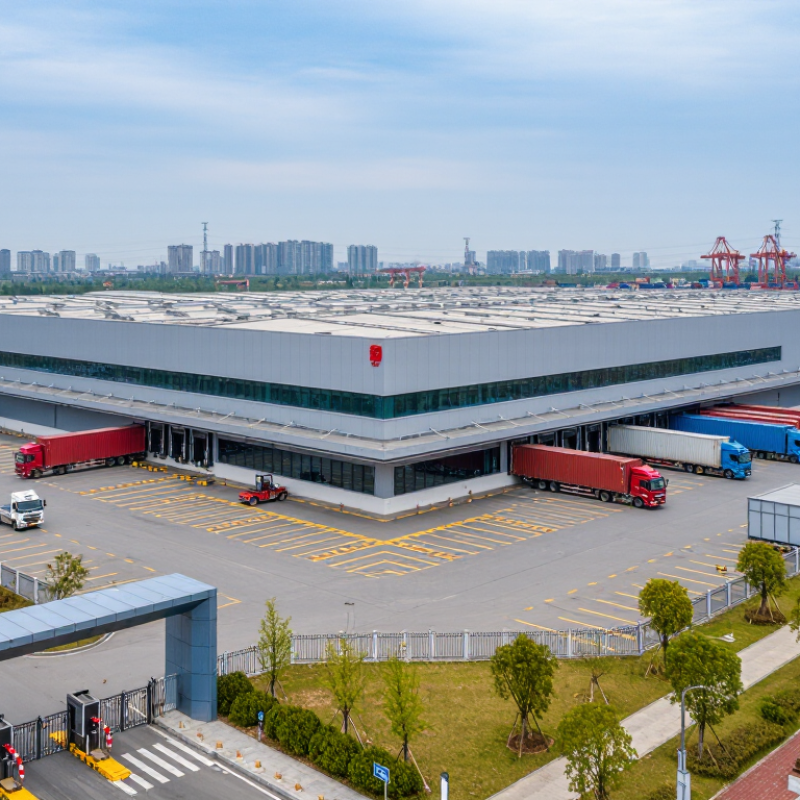
Warehouse expansion should begin with a measurable business purpose, not available land. Define whether the site will increase storage capacity, shorten delivery windows, or support seasonal demand. In China, regional customer density and transport access can change operating costs significantly. Start with evidence. Review the past 24 months of orders, inventory peaks, receiving volumes, and dispatch times. A practical target might be 30% more pallet positions without reducing picking accuracy.
Operating requirements must translate goals into floor-level decisions. Specify product dimensions, storage temperatures, handling methods, shift patterns, and expected daily throughput. Map the movement from receiving docks to inspection, storage, picking, packing, and outbound staging. Keep high-frequency items close to packing stations. Leave enough space for safe turning and maintenance access. Small details matter. A blocked aisle can delay an entire shift.
Reliable planning also needs tested assumptions. Ask supervisors where congestion actually occurs, then compare their feedback with system records and physical counts. That assumption failed in one expansion review: forecasted growth was correct, but returns consumed the planned staging area. Build adjustable zones, flexible racking, and spare utility capacity where possible. Confirm fire protection, building approvals, worker safety, and environmental requirements with qualified local professionals. Measure twice. Expansion plans should be reviewed against real operating data every quarter, because demand, labor availability, and delivery patterns rarely remain stable.
| No. | Planning Dimension | Expansion Goal | Recommended Planning Data | Operating Requirement | Practical Benchmark or Calculation | Priority | Decision Gate |
|---|---|---|---|---|---|---|---|
| 1 | Demand and Volume Forecast | Provide sufficient capacity for expected growth without creating excessive idle space. | Historical receipts, shipments, order lines, peak-month volume, product mix, and a three-to-five-year demand forecast. | Separate average demand from peak demand and identify seasonal, promotional, and regional fluctuations. | Design capacity should normally cover peak throughput plus a 15%–25% operating buffer. Use scenario planning for base, high-growth, and downside cases. | High | Approved volume forecast and peak profile. |
| 2 | Storage Capacity and Cube Utilization | Increase usable storage while preserving safe access, replenishment efficiency, and inventory visibility. | SKU count, inventory units, pallet positions, carton dimensions, storage density, inventory turnover, and reserve-stock requirements. | Define separate areas for reserve storage, forward picking, quarantine, returns, damaged goods, and value-added services. | Plan normal storage utilization at approximately 80%–85%; sustained utilization above 90% usually reduces flexibility and increases congestion. | High | Required pallet, carton, and bin positions are validated against the forecast. |
| 3 | Site Selection and Regional Coverage | Improve customer service reach and control transportation cost through an appropriate location strategy. | Customer and supplier locations, delivery zones, road access, labor availability, utilities, land or rental cost, and flood or seismic exposure. | Evaluate inbound and outbound travel time, truck restrictions, local operating conditions, and access to major transport corridors. | Compare total landed cost rather than rent alone: occupancy, labor, utilities, handling, line-haul, last-mile, taxes, and implementation costs. | High | Location meets service-time and total-cost requirements. |
| 4 | Material Flow and Layout | Reduce travel distance, cross-traffic, handling touches, and process bottlenecks. | Inbound and outbound dock volume, SKU velocity, pick paths, staging requirements, equipment routes, and process-cycle times. | Use clear receiving, storage, picking, packing, dispatch, and returns flows. Separate pedestrians from powered equipment where required. | Map the highest-volume SKUs and order profiles first. Reserve staging space for peak-day inbound and outbound volume rather than average volume only. | High | Flow simulation confirms that docks, aisles, and staging areas support peak operations. |
| 5 | Throughput and Dock Capacity | Process peak receipts and shipments without extended queues or missed dispatch cutoffs. | Daily and hourly pallet, carton, and order-line volume; vehicle arrival pattern; loading time; unloading time; and carrier schedules. | Set dock appointment rules, staging limits, door allocation, inspection procedures, and cutoff times. | Size labor and dock resources to the busiest operating window. Include a buffer for appointment variability, inspection, documentation, and equipment downtime. | High | Peak hourly throughput and dock-door requirements are documented. |
| 6 | Order Fulfillment and Service Levels | Support promised delivery times and improve order accuracy as volume increases. | Order cycle time, order-line volume, cutoff times, same-day or next-day requirements, fill rate, and order accuracy. | Define service levels by customer segment, order type, delivery region, and product category. | Track at least order accuracy, on-time dispatch, on-time delivery, inventory availability, and average order-cycle time. | High | Expansion design can meet the required service level during peak periods. |
| 7 | Labor and Workforce Planning | Provide enough trained labor while controlling overtime, turnover, and safety risk. | Task minutes, shift pattern, attendance, productivity by process, training time, wage rates, and seasonal labor requirements. | Plan staffing separately for receiving, put-away, replenishment, picking, packing, dispatch, inventory control, maintenance, and supervision. | Use engineered or historical task times to calculate labor hours. Add coverage for breaks, leave, training, absenteeism, and peak variability. | High | Staffing model and training plan are approved before commissioning. |
| 8 | Warehouse Technology and Data | Improve inventory accuracy, process control, traceability, and scalability. | Current transaction volume, master-data quality, barcode structure, integration points, inventory accuracy, and exception frequency. | Define requirements for warehouse management, receiving, picking, replenishment, packing, shipping, cycle counting, and reporting. | Use a single item, location, lot, serial, and status definition across systems. Test interfaces and master data before physical go-live. | High | Process, data, interface, cybersecurity, and user-acceptance tests are passed. |
| 9 | Safety, Compliance, and Resilience | Protect employees, inventory, facilities, and business continuity. | Risk assessments, fire-protection requirements, emergency routes, hazardous-material classification, insurance conditions, and local approvals. | Maintain clear egress routes, safe aisle widths, equipment inspection, load limits, emergency response, incident reporting, and business-continuity procedures. | Design must comply with applicable Chinese construction, fire-safety, occupational-safety, environmental, and transport requirements for the facility and products handled. | High | Required permits, inspections, risk controls, and emergency plans are complete. |
| 10 | Financial Case and Implementation Roadmap | Deliver measurable capacity and service improvements at an acceptable total cost and implementation risk. | Capital expenditure, rent or construction cost, labor, utilities, equipment, software, maintenance, transport, transition cost, and expected savings. | Define project phases, procurement lead times, construction milestones, equipment installation, pilot operations, inventory migration, and contingency plans. | Evaluate total cost of ownership, payback period, capacity utilization, cost per order, cost per pallet, and sensitivity to volume or labor changes. | High | Approved business case, schedule, risks, budget, and post-launch KPI plan. |
Start with customer density, supplier clusters, ports, airports, highways, and available workers.
Measure daily receipts, peak orders, storage days, picking rates, dock turns, and returns.
Run a small pilot with real cartons before full construction.
Compare wages, transport costs, tax treatment, consumption growth, and infrastructure quality.
Include rent or land, construction, racks, equipment, utilities, insurance, staffing, and maintenance.
Verify land-use rights, planning permission, fire protection, environmental duties, safety, and building acceptance.
Construction may take three to six months after approvals.
Track dock-to-stock time, order accuracy, inventory accuracy, picking rate, and on-time dispatch.
Review weekly system data, shipment records, and physical cycle counts.
This Warehouse Expansion Planning Guide presents a practical framework for extending warehouse operations in China. It begins by defining clear expansion goals, service standards, inventory requirements, labor needs, and future growth expectations. The guide then explains how to assess potential locations by considering transportation access, customer proximity, available capacity, workforce conditions, infrastructure, and regional market factors. It also covers the development of an expansion plan, including facility layout, storage design, material flow, safety considerations, and suitable technology systems for inventory visibility and operational control.
In addition, the guide highlights the importance of evaluating construction and operating costs, permits, regulatory responsibilities, supply risks, and realistic implementation timelines. After the expanded warehouse becomes operational, performance should be measured through indicators such as storage utilization, order accuracy, processing speed, labor productivity, service quality, and total operating cost. Regular reviews and data-based adjustments can help improve the warehouse network, strengthen flexibility, and support sustainable business growth.
